
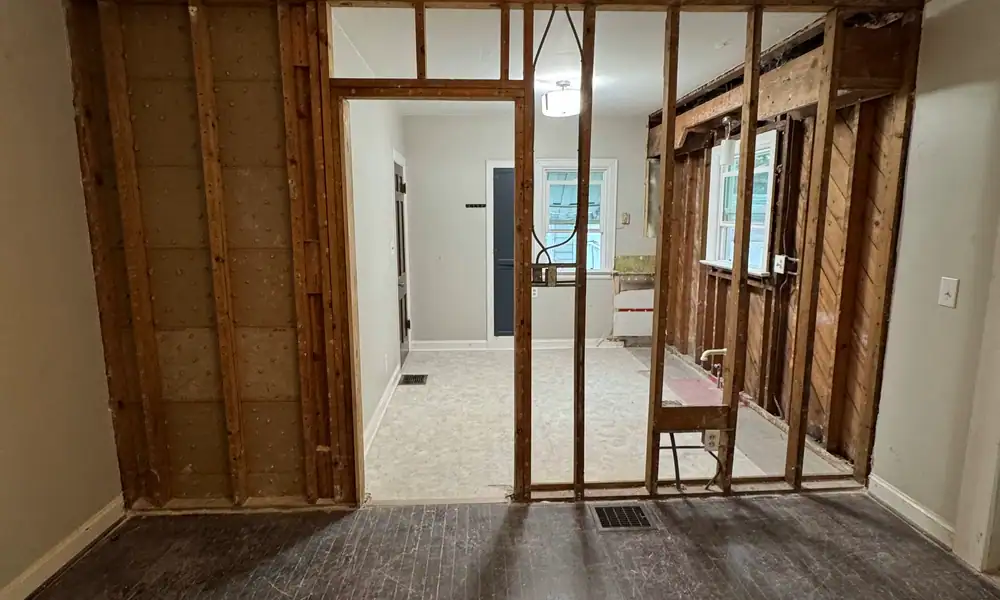
Walls & Drywall
The full strip, not a partial
Partition walls, drywall and plaster taken back to the framing.
CROWN provides full-service interior gutting and strip-out demolition across Central Kentucky. We strip drywall, insulation, flooring, ceilings, cabinetry, and fixtures down to the structural framing studs, hauling all waste off-site using our own trucks and dumpsters so your space is handed back as a clean, work-ready shell.
5.0 · 56 Google reviews (opens the Google listing in a new tab)
Licensed · Bonded · Insured · EPA compliant
Every demolition company in this market will tell you about asbestos. Far fewer will tell you about this one, and it reaches a great many more houses.
What it covers. EPA’s Renovation, Repair and Painting rule applies to “work in houses, apartments and child-occupied facilities (such as schools and child care centers) built before 1978”. Lexington has a great deal of housing older than that, so on interior work this comes up far more often than the asbestos notification regime does.
Interior demolition is not the small-job exception. The rule exempts minor repair disturbing “six square feet or less of paint per room inside”, but EPA states plainly that “window replacement and demolition of painted surfaces are always covered regardless of square footage.” Stripping a painted wall is demolition of a painted surface. There is no small version of it.
It is a rule about the firm, not just the worker. EPA requires that “anyone who is paid to perform work that disturbs paint in housing and child-occupied facilities built before 1978 must be certified”, and that firms “cannot advertise or perform renovation activities covered by the RRP Rule… without firm certification.” Certification runs five years, and Kentucky is not one of the states that administers its own programme: firms here apply to EPA directly.
What to actually do with this. Find out the year your building went up, and ask every contractor you get a quote from, us included, for their EPA firm certification number. A certified firm has one and will give it to you. Somebody who has never heard of the rule is telling you something useful about how they work.
🔶 PLACEHOLDER: Crown’s own EPA firm certification number goes here, or this paragraph says plainly that pre-1978 interior work is referred out. Nothing on crownclearing.com states a certification either way, and it is not a thing to assume in either direction. This is a plain-English summary of a federal rule, not legal advice; EPA is the authority on what applies to your building.
Crown’s own scope for interior demolition, broken into the things people actually ask about. Most jobs are four or five of them at once.
The full strip, not a partial
Partition walls, drywall and plaster taken back to the framing.
Bagged at the wall, not carried through the house
Batt, blown and board insulation removed and bagged at source.
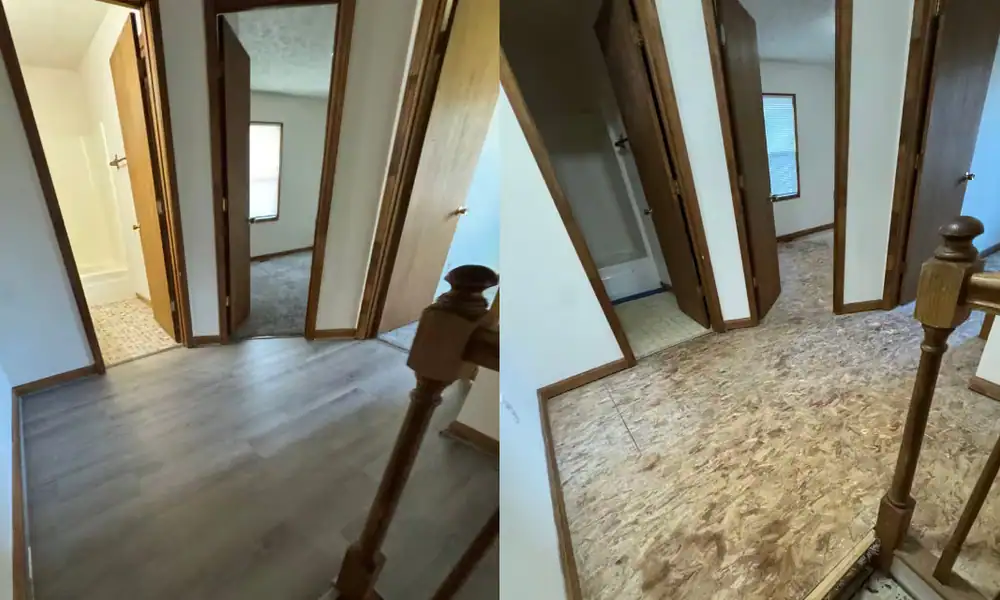
Down to the subfloor. Its own page
Tile, carpet, LVP, laminate and hardwood lifted to the subfloor. What is under it decides that job; see flooring removal.
Drop grid, drywall or lath and plaster
Suspended grids, drywall ceilings and old lath and plaster.
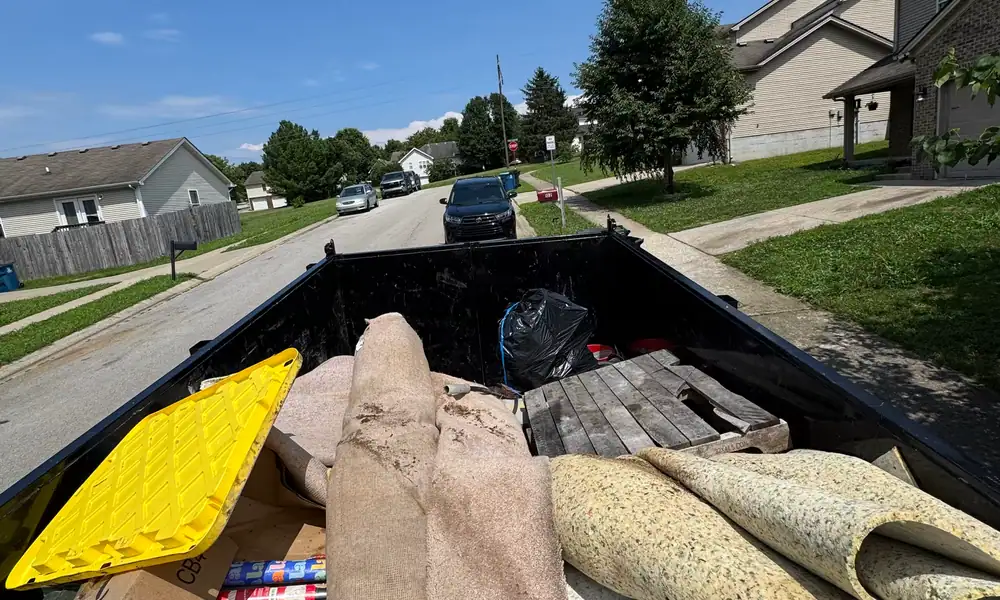
Priced in, not added at the end
Everything stripped is loaded and taken away by us.
Establishing precise removal boundaries before interior demolition begins prevents accidental structural damage and costly oversights. CROWN provides selective interior gutting across Central Kentucky, stripping designated drywall, flooring, cabinetry, and fixtures down to the studs while leaving load-bearing framing, subfloors, and specified salvage elements intact.
These are the boundaries interior demolition normally has in this trade, not a statement of what Crown will or will not agree to on your job. The two worth settling before anyone starts are which walls are structural and who is isolating the services.
We publish transparent price ranges for interior gutting and strip-out demolition across Central Kentucky. Every quote covers fixture dismantling, material teardown, and complete off-site debris haul-off using our owned trucks and dumpsters, giving you a firm upfront figure before work begins.
One room stripped to the shell. The bottom of Crown’s published range.
A floor, an apartment or the working half of a house.
Whole-house gut jobs. Quoted on the walk rather than the room count.
These are Crown’s own published interior gutting ranges, split across the tiers people ask in. The demolition hub publishes the same $1,500 to $6,000+ figure for the service as a whole.
Four steps, no obligation, and you only pay for work completed.
Two or three photos per room and the address. You get a number back within two hours, guaranteed.
We agree what comes out and what stays, then protect the routes, the stairs and anything staying put.
Room by room in a controlled order, loading as we go rather than piling it in the drive.
Debris gone, floors swept, and we walk it with you before the next trade arrives.
Very quick from contact to in home to remove some flooring. Once on site they got straight to work and did an outstanding job! Very reasonable price for the work done. Will continue to use them for all future needs.
Extremely helpful and nice, was hired for land clearing and site preparation they removed pesky honey suckle. Definitely going to hire them in the future.
Very hard workers that cleaned out a whole house that was trashed and filthy. Very polite and considered. Would definitely recommend this company!
Based in Lexington, CROWN provides full-service interior gutting and material removal across Fayette County and surrounding Central Kentucky communities. Because dumpster staging and truck access dictate job logistics more than distance, providing your exact street address helps us evaluate site accessibility and deliver a firm upfront quote.
Answered properly rather than deflected to a phone call.
Send two or three photos. If it is really a different service we will say so and point you at the right page. It costs you nothing either way.
Send photos insteadUsually not for the demolition itself. Crown’s demolition page puts most interior work outside the wrecking-permit regime, which covers structures coming down. What does often need a permit is what happens next: moving or removing a load-bearing wall, altering plumbing, electrics or HVAC, and anything structural is your city’s building inspection office, not ours. Tell us at quote stage what the room is becoming, and we will tell you which parts we think fall on the other side of that line.
If it was built before 1978, very probably. EPA’s Renovation, Repair and Painting rule covers houses, apartments and child-occupied facilities built before 1978, and it states that “demolition of painted surfaces are always covered regardless of square footage”, so an interior strip is not a job the six-square-foot minor-repair exemption reaches. The section above sets out what that means and what to ask any contractor, including us.
Not as a demolition decision. Whether a wall is load-bearing is a structural question, and removing one normally needs a permit and a specified beam or header designed by someone qualified to specify it. What we do is take out the walls you have established are non-structural, and leave the ones you have not. If you are not sure which is which, find that out before you get quotes: it changes the scope, the price and the programme.
Yes, and it is one of the categories above. Tile, carpet, LVP, laminate and hardwood all come up as part of a gut. It is worth reading the flooring removal page if the floor is the main thing you want out, because what is underneath the covering changes that job far more than the covering itself does.
It is the same work, but the planning is different enough that the three commonest rooms have their own pages: kitchen demolition, where the job is really about what gets left standing for the fitters; bathroom demolition, where the material is heavy and what is behind the tile is the risk; and flooring removal, which is priced per square foot rather than per room. Whole-floor and whole-house strips are this page.
A single room is usually a day. A floor or an apartment is commonly two to four. A whole house depends on what is behind the walls as much as the floor area: lath and plaster is slower than drywall, and old ductwork slows everything. You get a time with the price rather than an estimate here, and if your next trade has a start date, say so when you ask.
Lexington and the surrounding counties: Lexington, Georgetown, Nicholasville, Richmond, Frankfort, Winchester, Versailles and Paris. The ZIP codes are listed above. Interior work travels better than most of what we do, because the job is inside and the weather does not get a vote.
Two or three photos per room and the address. You get a number within two hours, guaranteed, and an honest answer on the pre-1978 question before you commit to anything.