
Full Unit Clear
The whole of what remains
Furniture, belongings, rubbish and whatever is left in the cupboards.
Clearing a rental unit once possession is lawfully back with you. The legal position on what the tenant left behind is quieter than most landlords expect, and that is a reason to be careful rather than a reason to relax.
5.0 · 56 Google reviews (opens the Google listing in a new tab)
Licensed · Bonded · Insured · EPA compliant
This is the single most useful thing we can tell a landlord, and it is the opposite of what most people assume.
First, the part that is written down. After a forcible detainer judgment the tenant has seven days to appeal. Only “if the party against whom the inquisition is found fails to file an appeal… on or before the seventh day” does the court issue a warrant of restitution, commanding the officer to “put the said A B in the possession of said premises.” Until that is executed, the unit is not yours to enter and empty.
And the workaround is closed. Kentucky provides that a landlord’s lien or security interest in a tenant’s household goods “is not enforceable” unless it was perfected before August 1984, and that “distraint for rent is abolished.” You cannot hold their belongings against what they owe.
Now the part that is not written down at all. Once possession is lawfully restored, there is no Kentucky statute setting how long you must store what the tenant left, what notice you must give, or how you may dispose of it. We looked, and the sections people cite for this do not say it. The security deposit rules that mention thirty and sixty days are about money, not furniture.
Which cuts both ways. No statutory duty also means no statutory protection. If the tenant later claims their possessions were destroyed, there is no safe harbour to point at: only your lease, any local ordinance, and what you can show. That is why we photograph every room before anything is touched, and why you should keep those photos whoever does the work.
This is a plain-English summary of Kentucky statute, not legal advice, and we are not lawyers. Your attorney and the District Court are the authorities on your eviction. Note also that Kentucky’s landlord-tenant act is local-option: within our area Lexington-Fayette and the City of Georgetown are confirmed adopters, and elsewhere you should confirm with your city clerk rather than assume.
Four steps, no obligation, and you only pay for work completed.
Photos from each doorway and the address. You get a number back within two hours, guaranteed, and we can hold a slot against a court date.
We ask whether the warrant has been executed. Not as paperwork, because arriving before it has is a problem for you, not for us.
The unit is photographed room by room before anything is touched, then cleared and loaded.
Left clear and swept so your repairs, repainting and re-letting can start immediately.
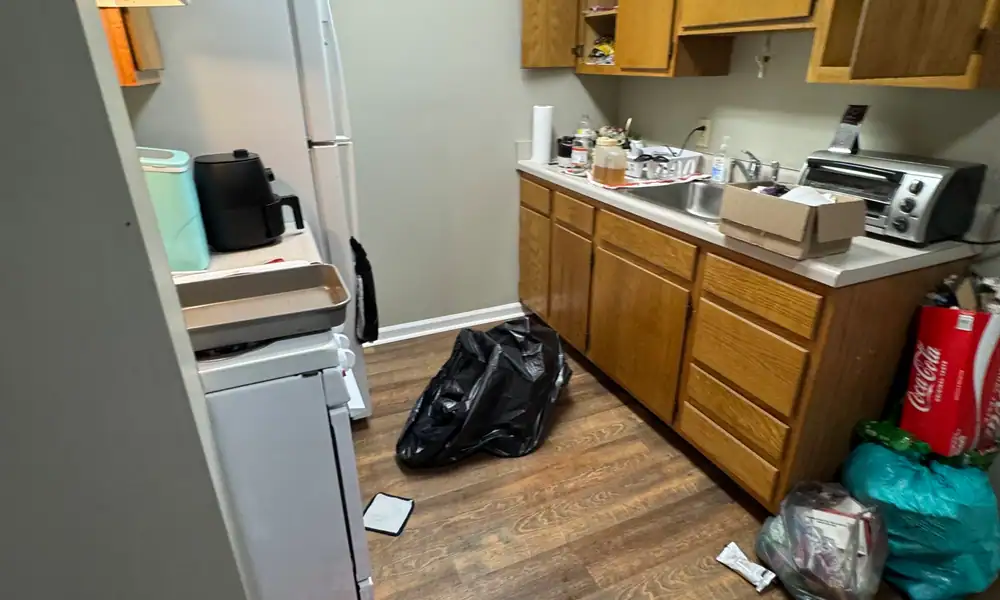
A unit left after an eviction is usually somewhere between a normal turn and a full cleanout, and you cannot tell which from the doorway.
The whole of what remains
Furniture, belongings, rubbish and whatever is left in the cupboards.
Your record, not just ours
The unit photographed room by room before we touch anything.
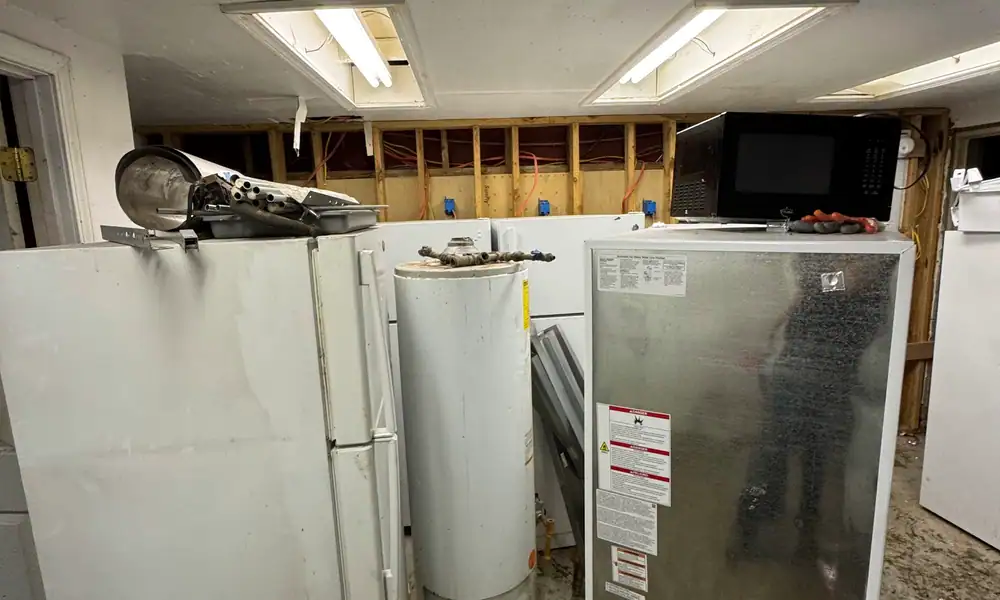
Where they are beyond use
Refrigerators, washers and damaged fittings taken away.
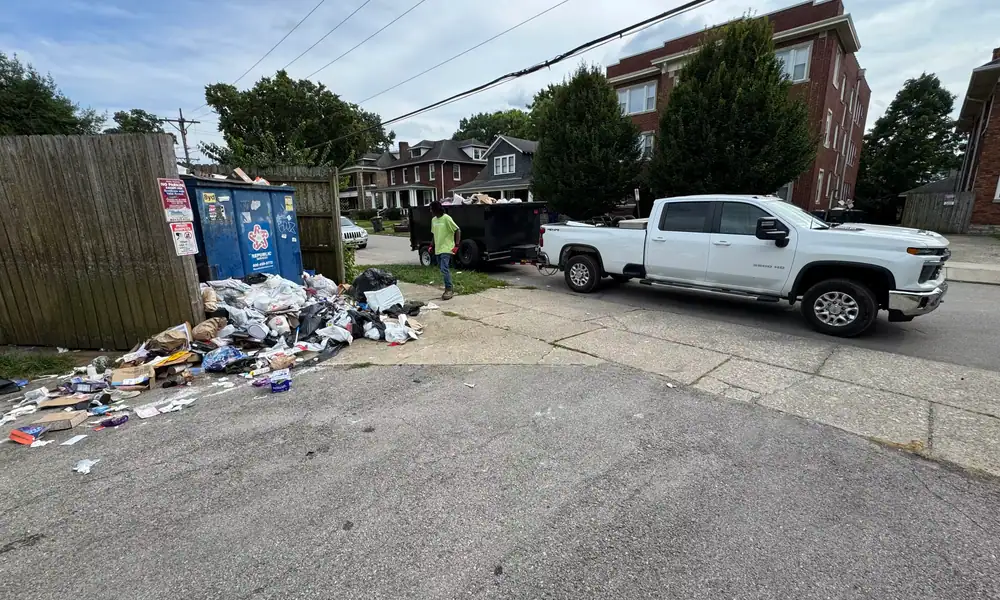
Usually the part nobody warns you about
Food waste, soiled furnishings and general refuse.
What the turn actually needs
The unit left clear and swept so repairs and repainting can start.

One price, carrying included
Everything cleared is loaded and taken away by us.
Published ranges, because almost nobody in this market will give you a number before a site visit. You get a firm figure before anything starts and only pay for work completed.
A studio or one-bedroom left in reasonable order.
The common job: a two or three-bedroom left substantially furnished.
A full property, or one where very little was taken and some of it has spoiled.
These are Crown’s own published cleanout ranges. If the unit is empty and what you need is the turnaround rather than the clear, rental turns is the page you want.
Very hard workers that cleaned out a whole house that was trashed and filthy. Very polite and considered. Would definitely recommend this company!
Very quick from contact to in home to remove some flooring. Once on site they got straight to work and did an outstanding job! Very reasonable price for the work done. Will continue to use them for all future needs.
Extremely helpful and nice, was hired for land clearing and site preparation they removed pesky honey suckle. Definitely going to hire them in the future.
Based in Lexington, working the counties around it. Send the address rather than the town: access decides more than distance on most of these jobs.
Answered properly rather than deflected to a phone call.
Send two or three photos. If it is really a different service we will say so and point you at the right page. It costs you nothing either way.
Send photos insteadThe safe answer is once the court’s warrant has been executed and possession is formally back with you. In Kentucky a forcible detainer judgment gives the tenant seven days to appeal, and only if no appeal is filed on or before the seventh day does the court issue the warrant of restitution directing the officer to put the landlord in possession. Removing a tenant’s property before that is self-help, and Kentucky closes the obvious workaround as well: a landlord’s lien on a tenant’s household goods is unenforceable and distraint for rent is abolished by statute. We would rather wait a week than be the reason a clean eviction turns into a claim.
This is the question everyone asks and the answer surprises people: Kentucky has no statute setting a storage period, a notice requirement or a disposal procedure for a tenant’s belongings. There is no safe-harbour provision to comply with, which means there is also nothing protecting you if the tenant later says their property was destroyed. Your exposure is governed by your lease, any local ordinance, and ordinary liability. The section above sets out what that means in practice, and why we photograph everything before we move it.
No, and this is the most common and most expensive mix-up on this subject. Kentucky’s thirty and sixty day provisions sit in the security deposit rules and govern money: what a landlord may do with a deposit when a tenant leaves owing rent and does not claim it. They say nothing at all about furniture. Anybody who tells you Kentucky gives you thirty days to store a sofa is reading the wrong statute.
It can, because Kentucky’s Uniform Residential Landlord and Tenant Act is not statewide law. It applies only where a city or county has adopted it, and the statute requires that it be adopted “in their entirety and without amendment.” Within our service area, Lexington-Fayette and the City of Georgetown are confirmed adopters. For the other towns, and for unincorporated county addresses, check with your city clerk rather than assuming either way: we are not going to publish a list we cannot stand behind.
That is a different route with different rules, and it is worth knowing it exists. Kentucky has a separate provision for removing an unauthorised occupant, available only where the person “is not and never has been a tenant of the premises”, and unlike the eviction statutes it does address belongings. If anyone has ever been a tenant of the property, that route is closed and you are back in forcible detainer. Ask your attorney which one you are in before you act.
Lexington and the surrounding counties: Lexington, Georgetown, Nicholasville, Richmond, Frankfort, Winchester, Versailles and Paris. The ZIP codes are listed above. Landlords and property managers with several properties tend to book us across the area rather than per town, and that is easier for everyone.
Photos from each doorway and the address. Tell us whether the warrant has been executed: it decides when we can start, and starting too early is a problem for you rather than for us.