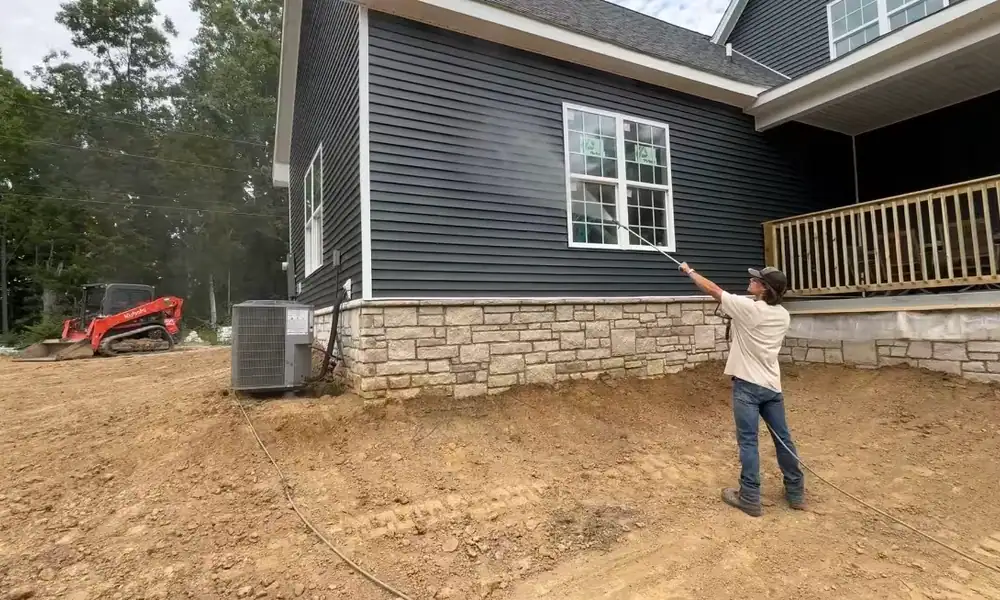
Lap siding sheds water downward, and only downward. Each
course overlaps the one below it, so rain runs down the face and off. Aim a
pressurized stream upward into that lap and you are doing the one thing
the design does not account for: pushing water behind the boards, into the
sheathing and the housewrap.
It does not show up that day. That is what makes it expensive. The
siding looks clean, the operator leaves, and the consequence is a damp sheathing
line, a stain that reappears from the inside, or soft trim a season or two later.
By then nobody connects it to the wash.
The same applies upward at the soffit. Soffit vents exist to pull air
into the roof space. Water driven into them goes into the attic, which is the
worst possible destination for it.
So the method is inverted. Cleaning solution is applied at low pressure,
given time to work, and rinsed off downward. The chemistry does the cleaning and
the water only carries it away. A wash that relies on force is faster for the
operator and riskier for the wall, and you cannot tell the difference by looking
at the result on the day.
🔶 PLACEHOLDER: the solution Crown uses on each substrate goes here. The mechanism above is general and correct; the specific product and dilution per material is Crown’s own practice and should be stated rather than described in the abstract. Naming it is also a stronger trust signal than anything else on this page.