
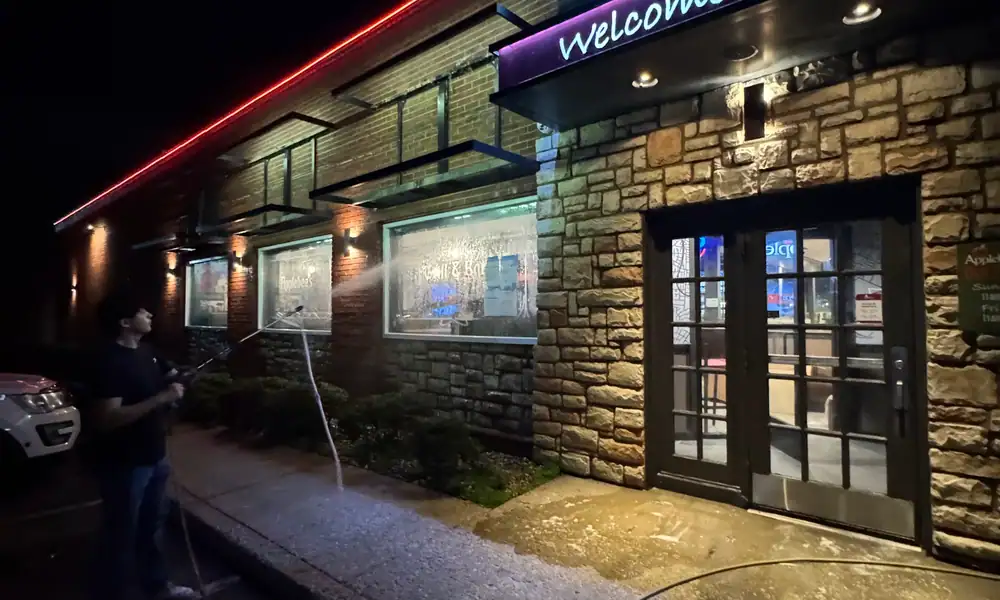
Storefronts & Walkways
The one customers form an opinion from
Entries, walkways and the concrete immediately outside a door. Gum, spills and foot traffic soiling, cleaned before opening rather than around customers.
Retail frontages, restaurant pads, HOA common areas and managed properties, cleaned on a schedule rather than when someone finally notices. Two things separate a commercial contractor from a residential one here, and only one of them is the equipment.
5.0 · 56 Google reviews (opens the Google listing in a new tab)
Licensed · Bonded · Insured · EPA compliant
This is the difference between a commercial contractor and a residential one working on a commercial site, and it is the question worth asking whoever you are about to hire.
Lexington’s rule is short. The city’s illicit discharge program states that “only rainwater or snow melt should be discharged to storm drains,” and defines an illicit discharge as occurring “when pollutants reach our creeks.” Among the pollutants it names are detergents, soaps, petroleum products and grease.
Which describes the runoff from a dumpster pad exactly. Wash water from a restaurant service area carries grease and organic waste. Wash water from a parking area carries oil. Add cleaning product and you have water that is not rainwater heading for a drain that only takes rainwater. Storm drains in Lexington go to creeks, not to treatment.
So on any area that drains to a storm drain, containment is planned first. That means blocking or berming the drain, recovering the water, and disposing of it somewhere it is allowed to go, not letting it run and hoping. It takes longer and it is part of why commercial cleaning is not priced like a driveway.
It is also enforceable, and reportable by anyone. The city asks the public to report suspected discharges to LexCall on 311 or (859) 425-2255 with the location and a description. On a visible commercial site, an employee, a tenant or a passer-by can make that call while the work is happening, and the property is a great deal easier to identify than the contractor.
🔶 PLACEHOLDER: Crown’s own containment and disposal method goes here, along with its commercial insurance limits and whether a certificate of insurance can be issued on request, which property managers ask for before a first job. LFUCG’s page names detergents, soaps, petroleum products and grease as pollutants but does not name pressure washing specifically: the application to wash water is the plain reading, not a quotation. This is a plain-English summary of published material, not legal advice, and LFUCG Water Quality is the authority on its own program.
Four steps, no obligation, and you only pay for work completed.
For a single property photos are usually enough. For a portfolio it is worth a walk-round, and it is free.
Overnight, pre-opening, or a weekday the site is quiet. This is settled before the price, because it changes the price.
Where the water goes is worked out in advance on any area that drains to a storm drain. See above: this is the part that separates contractors.
Recurring work goes on a schedule you do not have to chase. One vendor, one invoice, whether it is one site or twelve.
Commercial cleaning is mostly the same surfaces as residential work, in worse condition, on a schedule, with people needing to walk on them the next morning.
The one customers form an opinion from
Entries, walkways and the concrete immediately outside a door. Gum, spills and foot traffic soiling, cleaned before opening rather than around customers.
The one that becomes a complaint
Grease, organic waste and odor. The highest-value commercial cleaning there is, because it is usually the thing a tenant or an inspector has already raised.
Continuous use, no easy window
Lanes and service windows that cannot close during the day. This is the clearest case for overnight scheduling on the whole list.
Recurring, and rarely urgent until it is
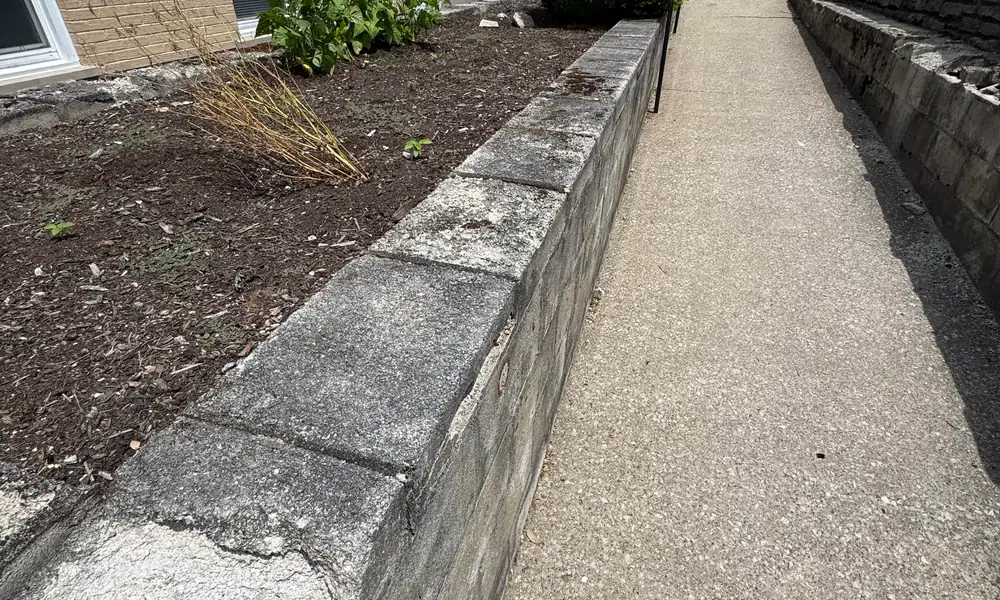
Shared walkways, mail areas, pool surrounds and building exteriors across managed portfolios. Scheduled quarterly or seasonally rather than reactively.
Published ranges, because almost nobody in this market will give you a number before a site visit. You get a firm figure before anything starts and only pay for work completed.
Recurring work across one property or a portfolio, on a frequency you set. Priced on scope, frequency and access rather than from a published band.
A single visit, usually because something has been raised. Same assessment, no ongoing commitment.
⚠️ Commercial work is not priced from the published residential ranges and those figures are deliberately not repeated here. Contract pricing depends on scope, frequency, access window and how many properties are in play, and it is negotiated per relationship: publishing a homeowner number against it would misrepresent both. Tell us the sites and the frequency and you get a real figure. For the wider trade offer, Crown is building a dedicated contractor and property manager page; until it is live, ask on the phone.
Very quick from contact to in home to remove some flooring. Once on site they got straight to work and did an outstanding job! Very reasonable price for the work done. Will continue to use them for all future needs.
Very hard workers that cleaned out a whole house that was trashed and filthy. Very polite and considered. Would definitely recommend this company!
Extremely helpful and nice, was hired for land clearing and site preparation they removed pesky honey suckle. Definitely going to hire them in the future.
Based in Lexington, working the counties around it. Send the address rather than the town: access decides more than distance on most of these jobs.
Answered properly rather than deflected to a phone call.
Send two or three photos. If it is really a different service we will say so and point you at the right page. It costs you nothing either way.
Send photos insteadYes, and on most commercial sites that is the sensible answer rather than the premium one. Drive-thru lanes, entries and walkways cannot really be cleaned around customers, and closing for it costs far more than scheduling it at 4am. Overnight and pre-opening work is normal for us and is priced as what it is.
Not into the storm drain, which is the point. Lexington’s illicit discharge program says “only rainwater or snow melt should be discharged to storm drains” and names detergents, soaps, petroleum products and grease as pollutants. On any area draining to a storm drain, the water is contained and recovered rather than allowed to run. It is worth asking anyone bidding your site how they handle this: the answer tells you a lot.
Yes. A quarterly or seasonal schedule is a different proposition from a one-off and is quoted as one, across a single property or a whole portfolio. Tell us the sites and the frequency you want rather than asking for a per-visit rate and we will come back with something that reflects the actual commitment.
Because commercial work is not the residential service with a bigger number on it. Scope, frequency, access window and portfolio size all move it, and publishing a homeowner range next to contract work would misrepresent both. You get a real figure for your sites rather than a band you then have to negotiate away from.
Yes, one vendor, one schedule and one invoice across a portfolio is most of the reason property managers ask in the first place. It is also the work we most want, so tell us how many sites there are even if you only want one cleaned first.
🔶 PLACEHOLDER: Crown to supply insurance limits and confirm that a certificate of insurance can be issued on request. This is the first thing a property manager asks and it belongs on the page rather than in a phone call. Ring (859) 213-6077 in the meantime and ask directly.
Tell us the properties, the surfaces and when we can be on site. For a single location photos are enough; for a portfolio the walk-round is free. Recurring work is what we are set up for, so say if there is more than one.