
Ceramic & Porcelain Tile
Plus the thinset under it
Tile lifted and the thinset or mortar bed taken back to sound subfloor.
Tile, carpet, LVP, laminate and hardwood up and gone, down to a subfloor your fitter can work on. What is under the old floor decides this job far more than the floor does.
5.0 · 56 Google reviews (opens the Google listing in a new tab)
Licensed · Bonded · Insured · EPA compliant
Published ranges, because almost nobody in this market will give you a number before a site visit. You get a firm figure before anything starts and only pay for work completed.
Carpet, vinyl and laminate. The axis is square feet; Crown supplies the rate.
Ceramic and porcelain, where the thinset under it sets the rate.
The slowest category, and the one worth quoting separately.
🔶 PLACEHOLDER: Crown does not publish a flooring rate. This is the one job in the cluster that is genuinely priced per square foot, which means it needs a rate rather than a range. Two figures from Crown, soft floors and tile, finish this grid.
This is the most misunderstood point in floor removal, and it is not really about the age of the tile at all.
Old resilient floor covering has its own category. The federal asbestos standard defines Category I nonfriable ACM as “asbestos-containing packings, gaskets, resilient floor covering, and asphalt roofing products containing more than 1 percent asbestos”. Resilient floor covering is named in the definition: old vinyl tile and sheet sits squarely in it.
Category I is not automatically regulated material. The regulated category, RACM, is friable material, material that “when dry, can be crumbled, pulverized, or reduced to powder by hand pressure”, plus Category I material that has become friable.
And here is the line that matters on a real floor. Category I nonfriable material also becomes RACM when it “will be or has been subjected to sanding, grinding, cutting, or abrading.” Lifting old tile intact and taking a grinder to the mastic underneath are not the same act in the eyes of the rule. The grinder is the trigger.
What that means for your quote. It is why anyone quoting a floor should ask what the covering is and how old the building is before giving you a rate, and why "we will just grind the rest off" is the wrong answer on an unknown floor. If the material is unknown and old, testing first is cheaper than every alternative.
This is a plain-English summary of a federal standard, not legal or regulatory advice, and state and local rules stack on top of it. We are not an asbestos abatement contractor; where abatement is needed it is a licensed specialist’s job and we will say so. Send photos and the age of the building and we will tell you which conversation you are in.
Every floor is two jobs: taking the covering off, and dealing with whatever stuck it down. The second one is where the time goes.
Plus the thinset under it
Tile lifted and the thinset or mortar bed taken back to sound subfloor.
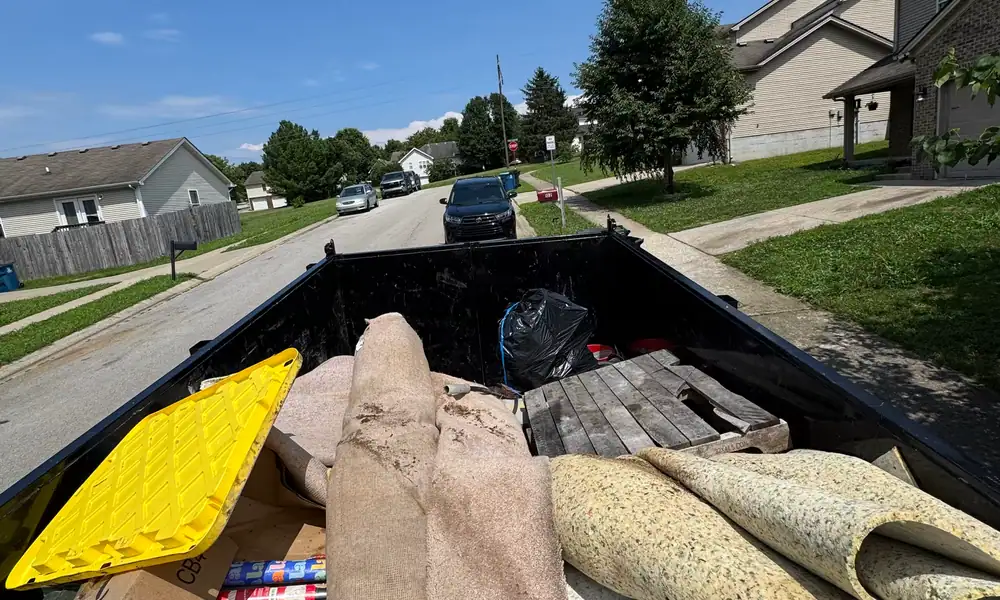
Underlay, gripper and staples too
Carpet, underlay, tack strip and the staples left behind.
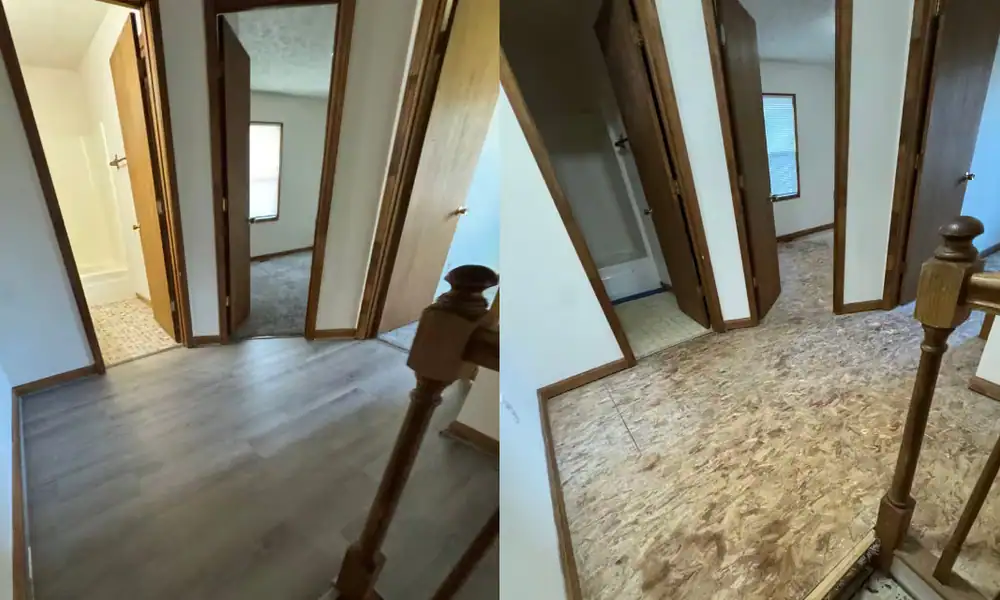
Usually the fastest floor in the house
Click and glue-down LVP, sheet vinyl, and laminate with its underlay.
Nailed, stapled or glued
Solid and engineered board lifted to the subfloor.
The part that decides the price
What the old floor was stuck down with, taken back where it can be.
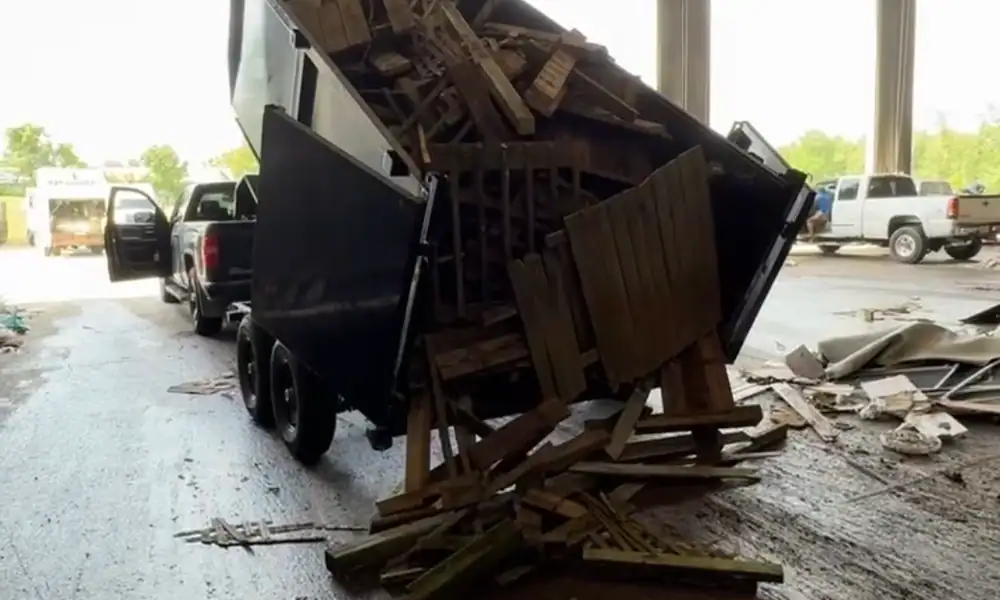
Priced in, not added at the end
Everything lifted is loaded and taken away by us.
Four steps, no obligation, and you only pay for work completed.
Photograph the floor, a cut edge or doorway threshold if you have one, and tell us the rough square footage.
We establish what the covering is stuck down with and what the subfloor is, because that is what sets the method.
Covering up, then adhesive, thinset or tack strip taken back as far as the subfloor allows.
Floor swept, debris gone, and we walk it with you against what your fitter needs.
Very quick from contact to in home to remove some flooring. Once on site they got straight to work and did an outstanding job! Very reasonable price for the work done. Will continue to use them for all future needs.
Extremely helpful and nice, was hired for land clearing and site preparation they removed pesky honey suckle. Definitely going to hire them in the future.
Very hard workers that cleaned out a whole house that was trashed and filthy. Very polite and considered. Would definitely recommend this company!
Based in Lexington, working the counties around it. Send the address rather than the town: access decides more than distance on most of these jobs.
Answered properly rather than deflected to a phone call.
Send two or three photos. If it is really a different service we will say so and point you at the right page. It costs you nothing either way.
Send photos insteadIt might be, and it is worth establishing rather than assuming. Resilient floor covering is one of the materials named in the federal asbestos definitions, and older nine-inch tile and the black adhesive under it are the usual candidates. The important part is what the rule turns on: the section above sets out the difference between material that is left intact and material that is sanded, ground, cut or abraded, because that distinction, not the age of the tile, is what changes the job. If you have any doubt, a sample test is inexpensive and settles it.
Yes, as far as the subfloor allows, and it is usually the majority of the labour on a tile job. What is achievable depends on what is underneath: thinset comes off a concrete slab more completely than off plywood, where scraping too aggressively damages the sheet your new floor needs. Ask your fitter what tolerance they need on the subfloor and tell us: "clean enough to tile on" and "clean enough for LVP" are different targets.
It helps, and it is the cheapest thing you can do to bring the number down. We can clear a room as part of the job, but that is handling rather than flooring, and it is priced as such. An empty room is quicker, quieter and less risky for anything you care about.
Yes. Flooring is the one job in this cluster that scales down sensibly: a single room is a real job rather than a call-out. Whole-house strips are common too, and usually work out better per square foot than the same area split across three visits.
We take the floor off and show you what is under it. If the subfloor is sound, that is the end of our part. If it is soft, water-damaged or broken, replacing or repairing it is carpentry rather than flooring, and it is a separate scope, but you will see it the day we find it rather than when the new floor is being fitted.
Lexington and the surrounding counties: Lexington, Georgetown, Nicholasville, Richmond, Frankfort, Winchester, Versailles and Paris. The ZIP codes are listed above. Flooring travels well because the work is indoors and the weather does not get a vote.
Send a photo of the floor, one of a cut edge or threshold if you have one, and the rough square footage. Tell us the age of the building if the covering is old vinyl or tile.