The list, as the city publishes it. A certificate of insurance showing “bodily injury”, “per each accident”, “property damage” and “workmen’s compensation”, naming LFUCG as holder and covering wrecking. A grading permit. Notification of neighbors. An asbestos report. A letter from the owner authorising the contractor. A sewer plug number. A written demolition plan. Then the application itself.
Three offices, not one. The grading permit comes from Engineering at 101 E. Vine Street, 4th floor, on (859) 258-3410. The sewer plug number comes from Water Quality at 125 Lisle Industrial Avenue, on (859) 425-2400. The permit itself is Building Inspection, 101 E. Vine Street, 2nd floor, on (859) 258-3770. Three queues, and they do not run in parallel by themselves.
The neighbor notification is the step people miss. The city says its office “will furnish you with a list of addresses within 50 feet of the property line” and that notifications “must be made before starting any work.” You do not compile the list yourself, but you do have to serve it, and you have to do it before anything moves.
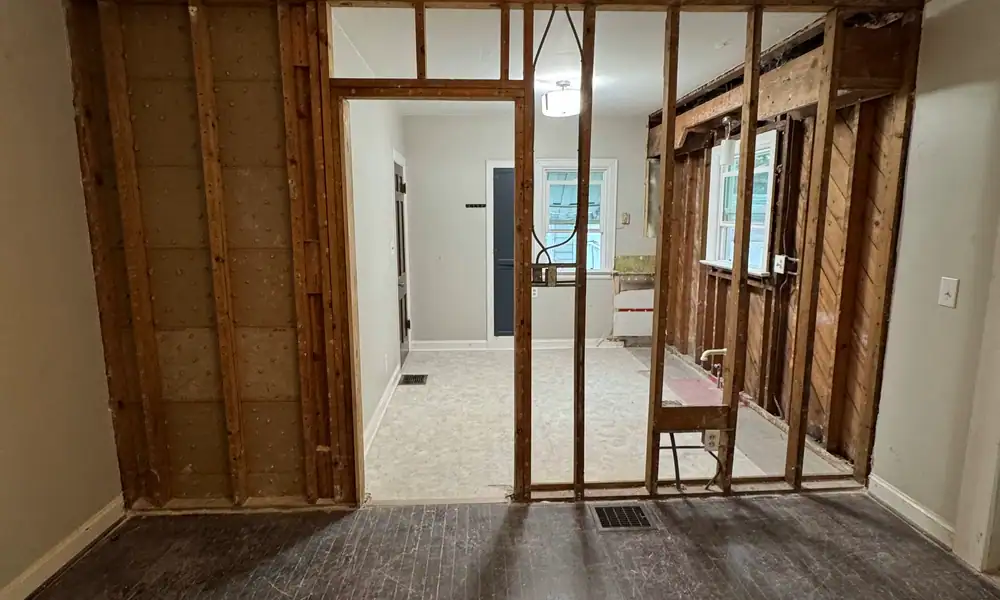
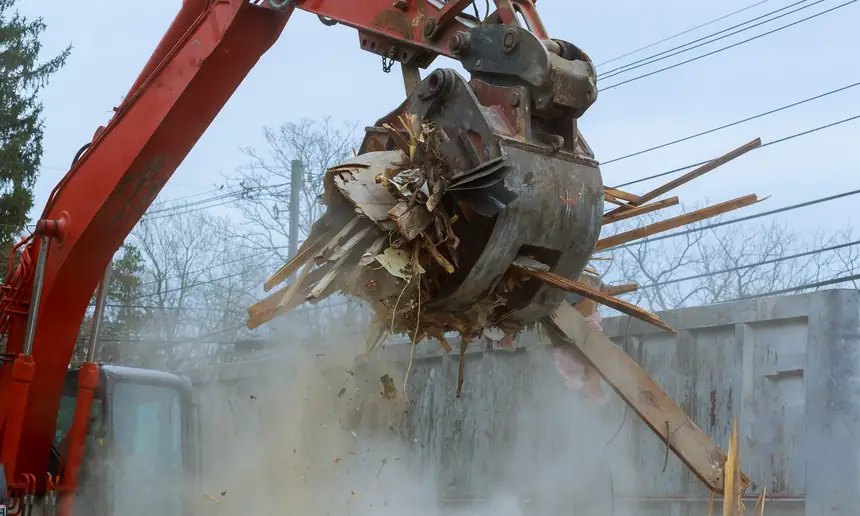
And the demolition plan is a real document. The city asks for “a step-by-step plan of how you intend to take the structure to the ground.” That is a contractor’s document rather than a homeowner’s, and it is one of the better reasons to use a company set up for structures.
Crown handles the permit process as part of the job. This is a plain-English summary of Lexington-Fayette’s published process, not legal advice, and the city is the authority on what your building needs. Decks, fences and most interior work sit outside the wrecking permit regime entirely.