
Overgrown Lot Clearing
The one that arrives with a letter.
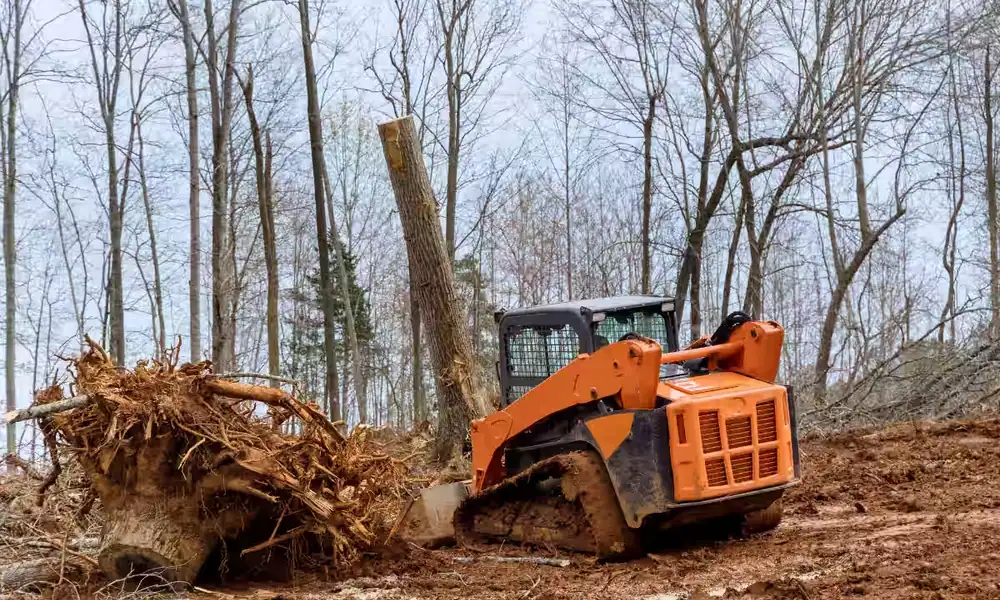
Vacant lots, rentals between tenants and neglected parcels, cleared back to open ground.
Overgrown lot clearing, in detailOvergrown lots, brush, honeysuckle and small trees, cleared and hauled off, not mulched and left on your ground. Frankfort is a planned run rather than a same-day call, which suits the work this end of the area actually needs.
5.0 · 56 Google reviews (opens the Google listing in a new tab)
Licensed · Bonded · Insured · EPA compliant
Every other page on this site tells you the number for that town. This one tells you why it does not, because a made-up figure is the sort of thing somebody acts on.
What we can tell you is that the number is not the same everywhere, and the spread is real. Across the counties we work and could verify, the limit runs from ten inches to twelve, and one of them sets two different limits on the same vacant lot depending how close to the boundary you are. The exemptions differ more than the figures do: some exempt agricultural land automatically, one makes you petition for it, one exempts ornamental planting and says nothing about acreage.
So “Kentucky’s rule is ten inches” is wrong, and it is the single most common thing we hear from people who have already looked it up. There is no Kentucky rule. There are city ordinances and county ordinances, and yours is the only one that matters.
Who to ask for Frankfort. The city runs its own code enforcement for property inside the limits. Outside them, Franklin County Planning, Zoning and Code Enforcement is at 321 West Main Street on (502) 875-8701. Either one will tell you in a phone call what would take us a paragraph of hedging.
And what it changes for the job: nothing, mostly. Whatever the figure, if you have had a letter it needs to be under it, and what we quote is the clearing rather than the compliance. Tell us the deadline and we will tell you whether it is workable.
This is the one page in the set without a sourced figure, and we would rather say that than print a number. If you have the notice in front of you it will cite the ordinance. Send us a photo of that along with the lot and we will both know where we stand. Send photos and ask
Every job here ends the same way: the material on a truck and off your property. See the full land clearing service
The one that arrives with a letter.
Vacant lots, rentals between tenants and neglected parcels, cleared back to open ground.
Overgrown lot clearing, in detail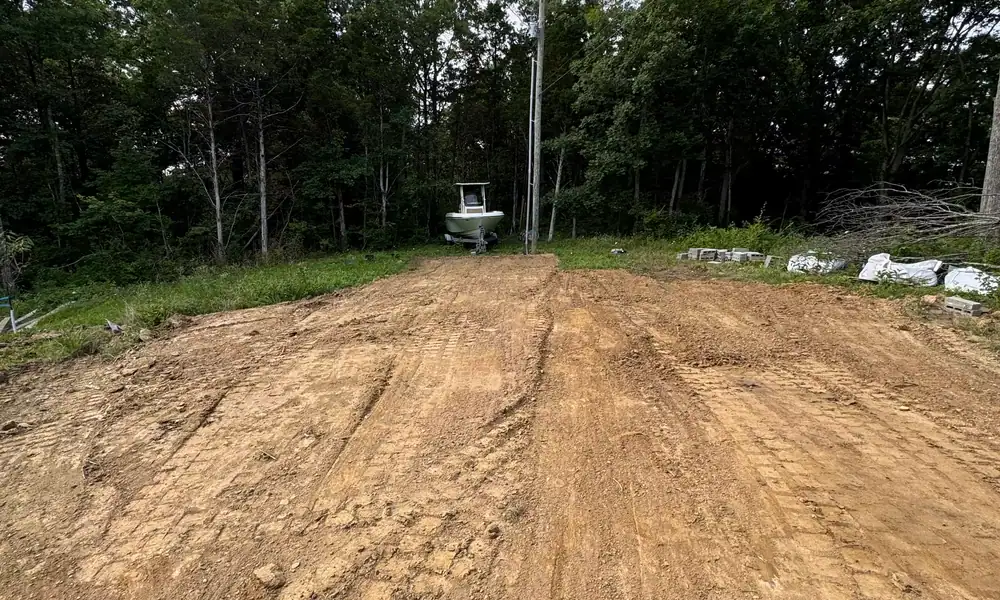
Drives, fence lines, access routes.
Clearing a line rather than an area. On the valley sides around Frankfort this is often all that can be worked.
Right-of-way clearing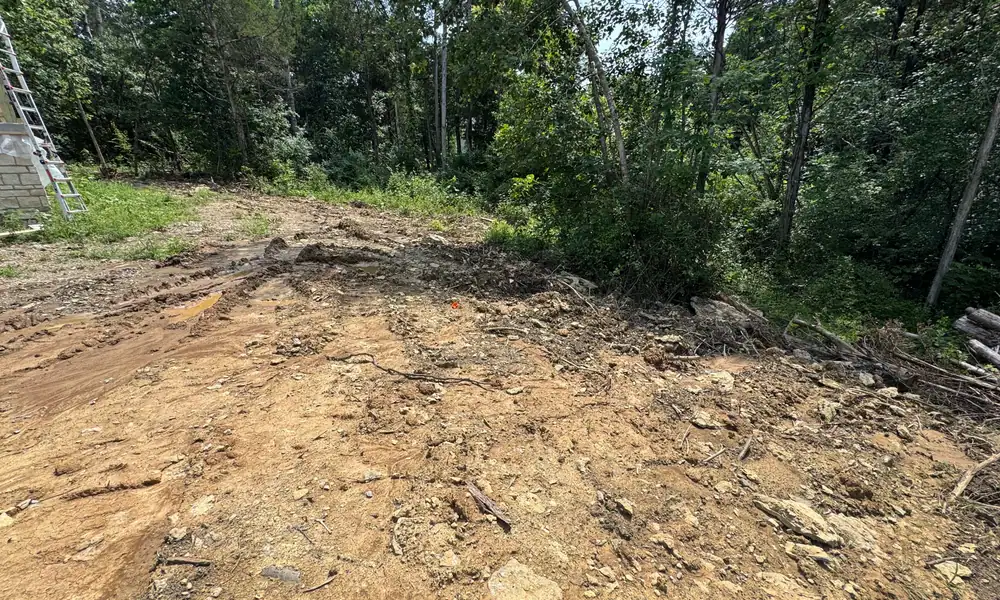
Clearing to a plan.
Pads, drives and outbuilding sites made workable, sequenced around the trades coming after us.
Site preparation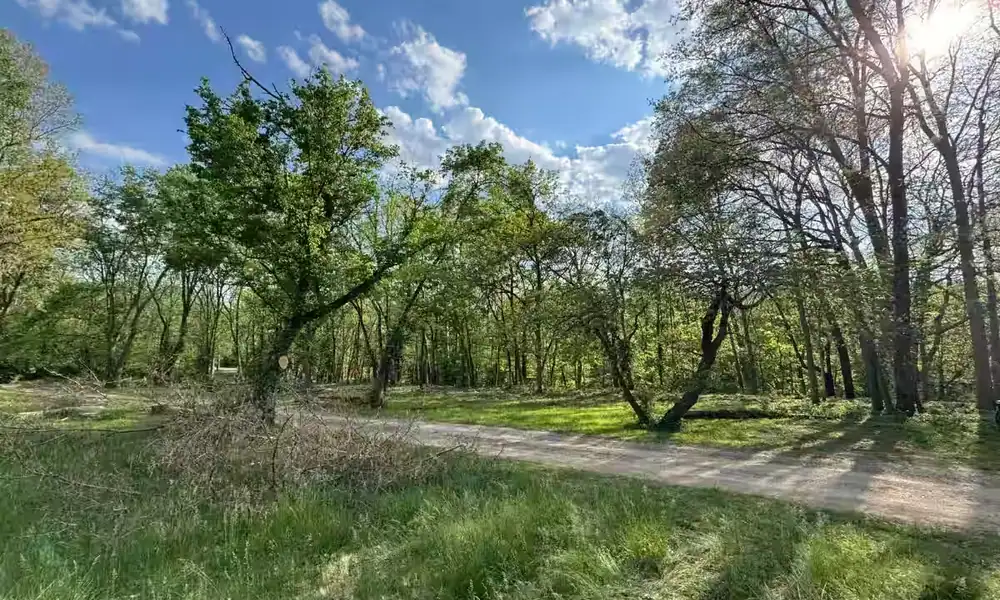
Ground that stopped being worked.
Franklin County has working land past the city edge. Reclaiming it is priced by the acre.
Pasture & field reclamation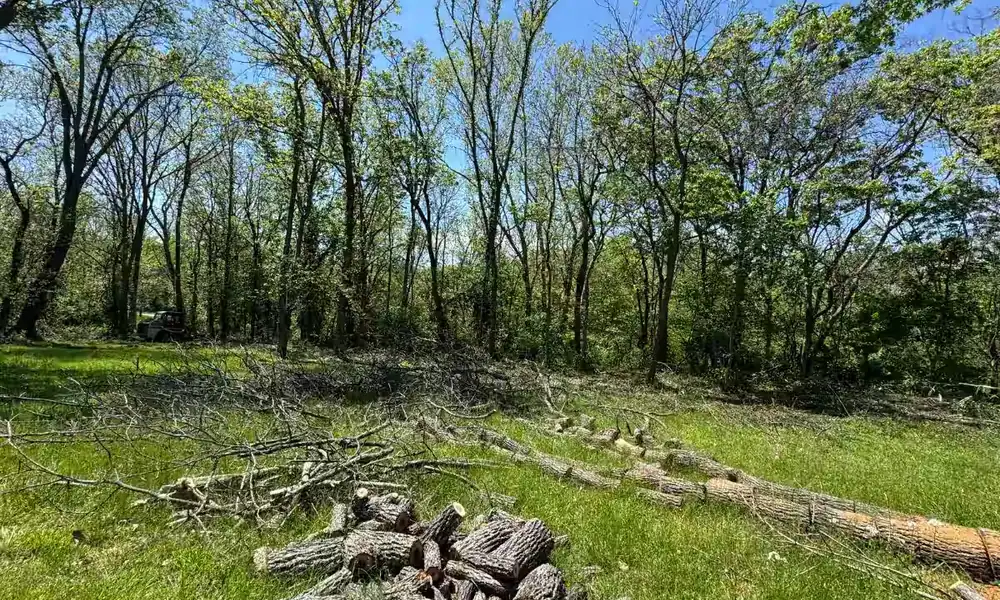
Under about 20 feet. Taller is a tree service.
Volunteers and scrub along fences and boundaries, and the stumps they leave.
Tree removal & stump grindingFrankfort is the state capital, and that changes who is buying clearing work here more than it changes the work itself.
Government, institutional and commercial frontage is maintained on a contract and a calendar rather than when somebody notices it. The work is specified, insured, invoiced and inspected, and the person booking it is not the person who owns it.
Which is a different conversation from a homeowner with a letter, and we would rather have it on those terms than pretend otherwise.
A certificate of insurance before the first job, a written scope so nobody argues about what “cleared” meant, photographs at completion, and one invoice rather than a clearing bill and a separate haul-off bill.
If you manage more than one property here, ask about trade terms rather than quoting each one separately.
The same published ranges as the main land clearing service. A page about one town should not quote you a different number from the page about the service.
Light brush and undergrowth. A back corner, a side yard, a fence line that’s got away from you.
Dense brush and small trees. A full honeysuckle thicket, or ground that hasn’t been touched in years.
Clearing plus rough grading, worked to your plan rather than to a tidy-up.
PLACEHOLDER: three real Franklin County jobs, before and after. Name the road or the part of the county in each caption; that detail is the part a competitor cannot copy.
CROWN’s own published list of the parts of Frankfort and Franklin County we work most often.
Outside Franklin County? We clear land across Central Kentucky: Lexington, Georgetown, Nicholasville, Richmond, Winchester, Versailles and Paris. The rule described above is this town’s own; every one of the eight sets its own and the figures genuinely differ.
Extremely helpful and nice, was hired for land clearing and site preparation they removed pesky honey suckle. Definitely going to hire them in the future.
Very quick from contact to in home to remove some flooring. Once on site they got straight to work and did an outstanding job! Very reasonable price for the work done. Will continue to use them for all future needs.
Very hard workers that cleaned out a whole house that was trashed and filthy. Very polite and considered. Would definitely recommend this company!
If yours isn’t here, call: we’d rather answer it before you book than after.
Send the photos with the address and a picture of the notice. Whether the date is workable is the first thing we come back on, not the last.
(859) 213-6077We are not going to quote you a figure for Frankfort, because we could not source the city’s ordinance to a document we could stand behind and a number somebody acts on is not a thing to guess at. What we can tell you is that the limit across the Central Kentucky counties we could verify runs between ten and twelve inches and that the exemptions differ more than the figures do, so do not carry another town’s rule across. Frankfort’s own code enforcement covers property inside the city; Franklin County Planning, Zoning and Code Enforcement is on (502) 875-8701 for everything outside it.
No, and this is the most common misunderstanding we hear. Weed and grass heights are set by city and county ordinance, not by the state, which is why they differ from town to town across an area you can drive across in an hour. The state sets the framework for how local governments enforce and abate nuisances; the number itself is local every time.
Photos of the lot, the address, and ideally a photo of the notice itself: it will cite the ordinance and the deadline, which tells us both exactly what has to happen and by when. We will say straight away whether we can hit the date, including if we cannot, so you can find someone who can. From our side it is a scheduling question and nothing more.
Yes, unless the stumps are treated. It resprouts, so cutting alone does not kill it: lasting control means repeated cutting over several years or a herbicide treatment on the cut stumps. We cut, load and haul; we do not spray. The Franklin County Extension office is the right place to ask what goes on the stumps, and the job is far smaller once the thicket is already down.
Yes, and in Frankfort that is a good share of it. Certificate of insurance before the first job, a written scope so there is no argument about what was in it, completion photographs, and a single invoice covering the clearing and the haul-off rather than two. If you look after more than one property, ask about trade terms rather than having each one quoted separately.
A small residential lot with light brush and undergrowth runs $400 to $1,200, a medium or overgrown lot $1,200 to $3,500 and up, and full site preparation is quoted on the plan. These are the same figures as our main land clearing page. What moves the number is property size, vegetation density, terrain and access, and on the valley sides around Frankfort, access does more of the work than it does on flat ground.
Photos, the address, and the notice if you have one. We will price the clearing and tell you plainly whether the deadline is workable, and point you at the right office for anything about the ordinance itself.