Published
Short answer: for structural demolition, yes. You need a demolition permit in Lexington, KY, except that Lexington-Fayette Urban County Government (LFUCG) does not use that terminology in its own documentation and classifies the authorization as a wrecking permit instead. That distinction misleads homeowners and out-of-state investors with considerable regularity, because they search the LFUCG website for “demolition,” retrieve nothing authoritative, conclude that no permitting requirement applies to residential property, and begin dismantling.
Then the stop-work order arrives.
If you are gutting a kitchen down to the studs, removing adhered flooring, or dragging a deteriorated shed off the back of the lot, the regulatory picture is substantially different. Keep reading, because the dividing line between renovation and demolition is not where most property owners assume it sits.
Dealing with LFUCG paperwork, sewer plug numbers, asbestos reports and three tons of debris is a bad way to spend a month. Crown Clearing & Removal handles demolition and debris haul-off across Central Kentucky. Call (859) 213-6077 for a free estimate, returned within two hours during business hours.
When Do You Absolutely Need a Demolition Permit in Fayette County?
You need a wrecking permit from the LFUCG Division of Building Inspection before demolishing any part of a building in Fayette County. That is the municipality’s own phrasing, and the qualifier “any part of” carries considerably more weight than contractors typically anticipate. It is the reason we advise clients to make one confirming phone call before mobilizing equipment.
Full House and Building Teardowns
This category is unambiguous. Residential teardowns, detached garages, commercial structures and multi-unit buildings all require an approved wrecking permit before a single load-bearing element is disturbed, and the application package is materially more demanding than a conventional building permit because it incorporates documentation from Engineering, Water Quality and an independent asbestos consultant before Building Inspection evaluates the submission at all.
Budget three to four weeks for a clean application, and considerably longer if any single component is rejected and has to be resubmitted.
Properties Inside a Lexington H-1 Historic Overlay
Lexington protects historic properties through the H-1 overlay zone, and this is where teardown projects die. Exterior alterations to a property inside an H-1 district, demolition emphatically included, require a Certificate of Appropriateness from the Board of Architectural Review (BOAR), a five-member design review panel appointed by the Mayor and the Urban County Council that convenes public hearings twice monthly.
BOAR has established precedent that permitting a structure to deteriorate is not a legitimate justification for razing it. Demolition by neglect gets refused.
A second complication catches owners outside the designated districts entirely. LFUCG staff review every demolition application submitted, and where a property is determined to be architecturally or historically significant, a 30-day administrative hold is placed on issuance so the structure can be documented before it disappears. Downtown, Gratz Park, the older residential streets adjacent to the University of Kentucky: verify your designation before you commit to a construction timeline, not afterwards.
Sewer Plugs and Utility Sign-Offs
Before LFUCG issues the wrecking permit, you must obtain a sewer plug number from Water Quality at 125 Lisle Industrial Avenue, and the appropriate category of grading permit from Engineering on the fourth floor at 101 E. Vine Street. Neither division operates on your schedule. They are independent review queues staffed by different personnel, and your demolition application is considered incomplete until both have been satisfied.
Utility disconnections follow identical logic: no municipal authority approves a structural teardown while live electrical, gas or water service still feeds the building, and arranging those terminations with the providers is the applicant’s responsibility rather than the city’s.
When You Usually Do Not Need a Lexington Demolition Permit
Non-structural interior work and most minor accessory structures fall outside the wrecking permit process entirely. This is the relief section. It is also where the actual expenditure concentrates in Central Kentucky, because for every full structural teardown there are twenty kitchens, bathrooms, decks and storage buildings.
Interior Gutting Rarely Triggers a Demolition Permit
Stripping a kitchen to the framing, demolishing a tile bathroom, or removing 1,200 square feet of adhered flooring constitutes renovation rather than building demolition, provided the load-bearing assemblies remain undisturbed. Disturb a structural wall, a bearing header or a column, and you are immediately back inside permit territory, as you are with any alteration that relocates plumbing or electrical distribution.
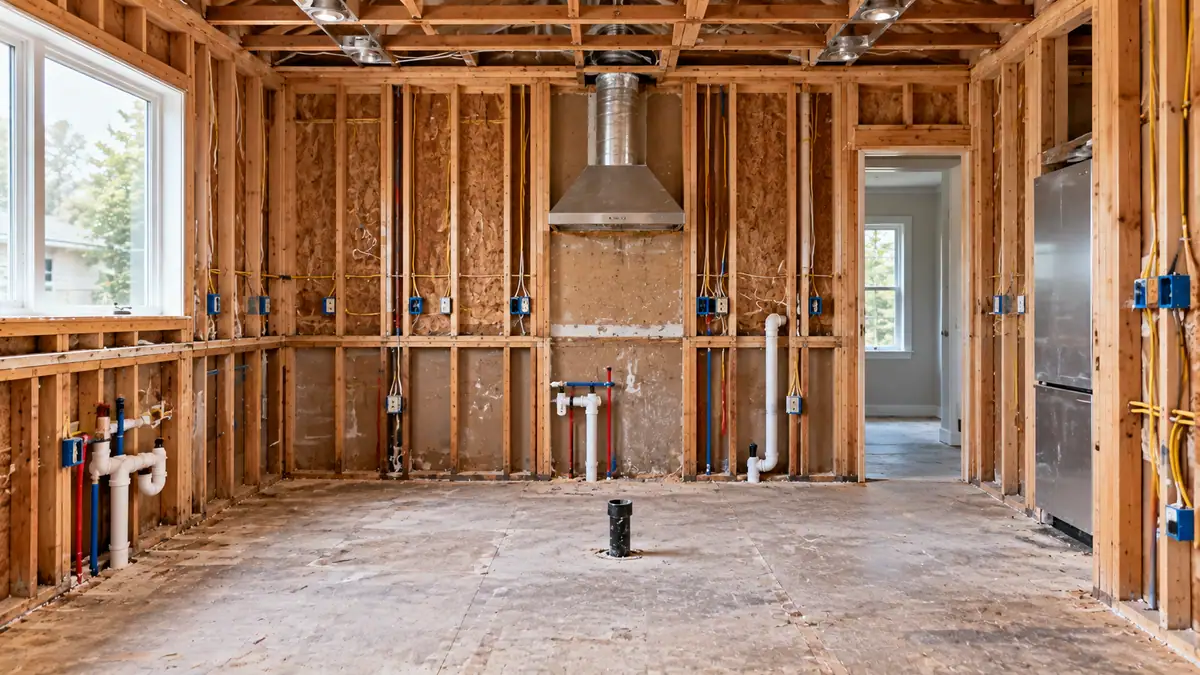
The practical rule we use on site: if the house would stand up fine without the thing you are removing, it is a gut, not a demolition. Our crews handle interior gutting and strip-outs on exactly this basis, including kitchen and bathroom tear-outs for landlords turning units on a deadline.
Sheds, Fences and Decks
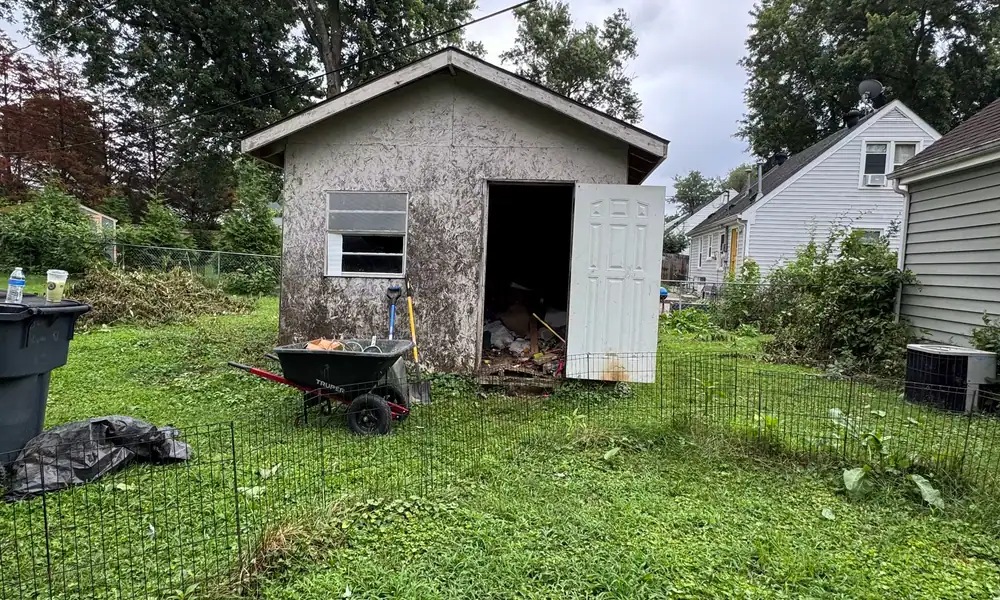
Most minor accessory structures come down without a wrecking permit, because a hand-built garden shed sitting on skids does not function as a building in any meaningful regulatory sense. A detached garage on a poured foundation unmistakably does. The determination shifts somewhere between those two, and the honest answer is that it depends on floor area, foundation type and whether the structure is permanently affixed to the ground.
Call Building Inspection with your dimensions first. Four minutes, and you stop guessing.
With that caveat registered, the substantial majority of shed and outbuilding removals and deck tear-offs we complete around Lexington, Nicholasville and Georgetown involve no permitting whatsoever, just a crew, a trailer and a morning.
Concrete, Patios and Driveway Removal
Breaking out a patio slab or a deteriorated driveway apron does not constitute building demolition and requires no wrecking permit. The complication is the public right-of-way: the moment your concrete abuts the municipal sidewalk or the apron where the driveway meets the street, you are operating within LFUCG’s jurisdiction rather than your own property boundary, which initiates a separate conversation with Engineering.
Most homeowners are genuinely unaware that they do not own the planting strip between the sidewalk and the curb.
The Hidden Trap: Kentucky Asbestos Law
Here is the requirement almost no competitor’s blog addresses, and it carries the most significant financial exposure of anything on this page.
Under Kentucky Division for Air Quality asbestos rules (opens in a new tab), projects involving a commercial building, a school, or an apartment dwelling with more than four units are subject to federal and state asbestos regulation, which means a thorough asbestos survey before demolition and a notification filed with the Division at least 10 working days before anything starts. Not 10 calendar days. Ten working days, which with a weekend and a holiday in the middle is most of three weeks.
The survey results determine everything downstream. Where the inspection identifies more than 160 square feet, 260 linear feet or 35 cubic feet of regulated asbestos containing material, a certified abatement entity must remove and dispose of that material before demolition commences. Beneath those quantities, certified removal is recommended rather than mandatory. The notification period continues to run regardless.
Now the municipal complication, which specifically catches single-family homeowners who correctly determined that the state regulation does not govern their property.
LFUCG requires an asbestos report prepared by a private agency as a component of the wrecking permit application. Unconditionally, irrespective of structure classification. Where that report returns positive, documented proof of abatement must be presented before the permit is issued. Your 1958 ranch house sits outside the Division for Air Quality’s regulatory scope and still cannot be lawfully demolished anywhere in Fayette County without that report in the application file.
Asbestos violations in Kentucky are enforceable at up to $25,000 per violation per day. An owner-performed teardown of a 1950s residence containing textured ceiling treatments, pipe insulation and vinyl asbestos tile is not an economy measure. It is an uninsured wager against a six-figure liability, with your household breathing the consequences.
How Do You Apply for a Demolition Permit in Lexington?
You apply through LFUCG Division of Building Inspection at 101 E. Vine Street, second floor, or online, and the application is only accepted once eight separate pieces of documentation are in hand. The city publishes the full list on its wrecking permit page (opens in a new tab), and here is what you are actually assembling:
- Certificate of insurance naming LFUCG as holder and specifically stating that it covers wrecking, with bodily injury, per-accident, property damage and workers’ compensation coverage. A standard contractor’s general liability certificate usually does not say “wrecking” anywhere on it, which is why these get rejected.
- A grading permit from Engineering, with the type depending on your project, obtained from 101 E. Vine Street, fourth floor, at (859) 258-3410.
- Written notification to every property owner within 50 feet of your property line. Building Inspection furnishes the address list, you send the letters, and the notifications must go out before any work begins.
- An asbestos report from a private agency, plus proof of abatement if the report is positive.
- A signed letter from the owner or authorized agent giving your contractor permission to perform the work.
- A sewer plug number issued by Water Quality at 125 Lisle Industrial Avenue, Suite 180, reachable at (859) 425-2400.
- A step-by-step demolition plan describing exactly how you intend to bring the structure to the ground. Not a sentence. An actual sequence.
- The completed application, submitted online through an account you create, or in person downtown.
Count the agencies in that list. Building Inspection, Engineering, Water Quality, plus a private asbestos consultant, and a letter-writing exercise with your neighbors. Four queues, any one of which can stall the other three.
Dumpster Rental vs Professional Demolition: What Does It Actually Cost?
Doing it yourself is cheaper only if you value your own time at zero and nothing goes wrong. Run the real math on a mid-sized shed or a kitchen gut.
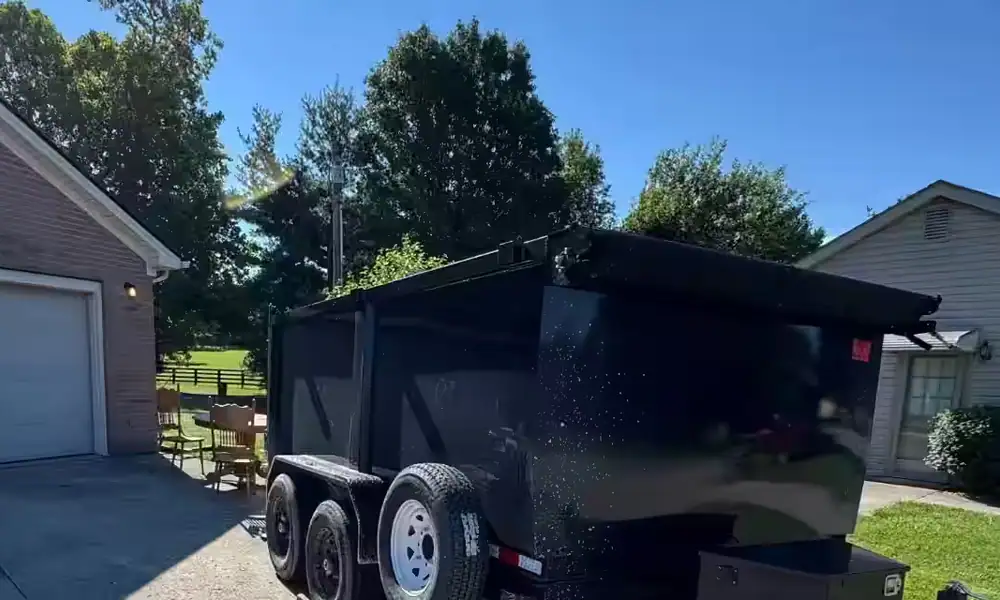
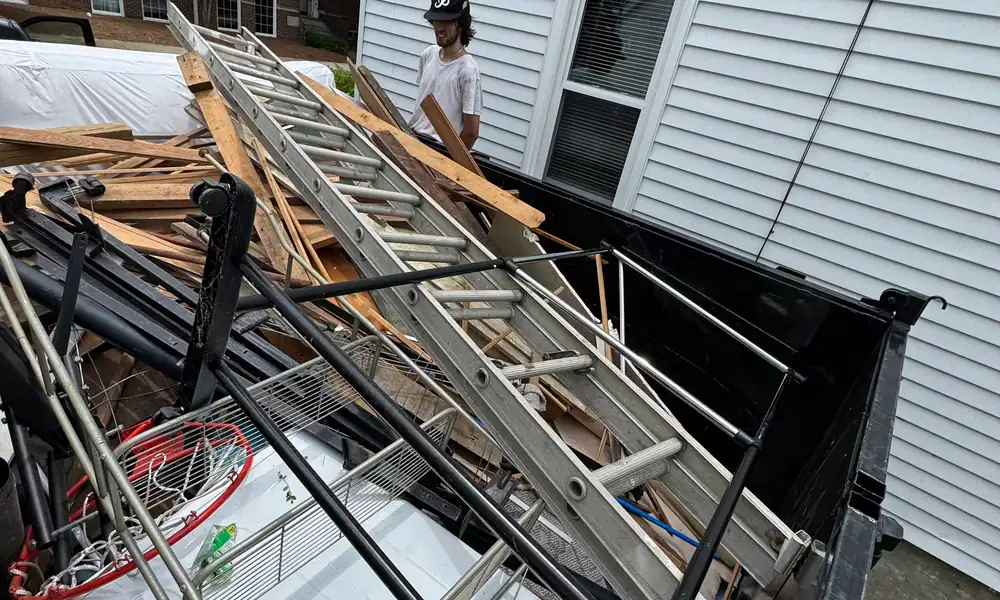
You rent a 15-yard roll-off, which through us runs $280 to $540 delivered and collected for a standard seven to ten days. You rent a skid steer, typically $250 to $400 a day locally, and you need a trailer rated to tow it. You pay tipping fees on anything the container will not take. You spend two or three weekends on it, you discover the slab under the shed, and somewhere in there you find the old floor tile that needs testing.
Compare that against a priced job. Our demolition work across Fayette, Scott and Jessamine counties runs $500 to $2,000 or more for decks, sheds, fences, concrete pads and interior gut work, with haul-off quoted inside that number instead of added at the end. One crew, one invoice, usually one day.
The difference is not really the money. It is that the debris leaves the property, and the liability leaves with it.
Some jobs genuinely suit the container. If waste accumulates gradually over two weeks of your own weekend work, rent the dumpster and load it yourself. If it all lands in one afternoon and has to be gone, take the crew.
Skip the Red Tape. Call Crown Clearing & Removal.
Do not spend your month fighting four LFUCG departments and then another weekend hauling a ton and a half of plaster to the landfill. Whether you need a kitchen gutted before Friday’s showing, a shed taken off the back of the lot, a deck pulled, or a concrete driveway broken out and carried away, Crown does it fast, cleanly and within the rules that actually apply to your address.
We are licensed, bonded, insured and EPA-compliant, we own our own trucks and dumpsters rather than brokering the job out, and we haul 100% of the debris away instead of grinding it into mulch and leaving it on your ground. Fifty-six Google reviews, averaging 5.0.
Send two or three photos and your ZIP code and you get a firm number, free, guaranteed within two hours during business hours, whether or not you book the work.
Call (859) 213-6077 or request a free quote. Open Monday to Saturday, 8:00 AM to 6:00 PM, serving Lexington, Georgetown, Nicholasville, Richmond, Frankfort, Winchester, Versailles and Paris.